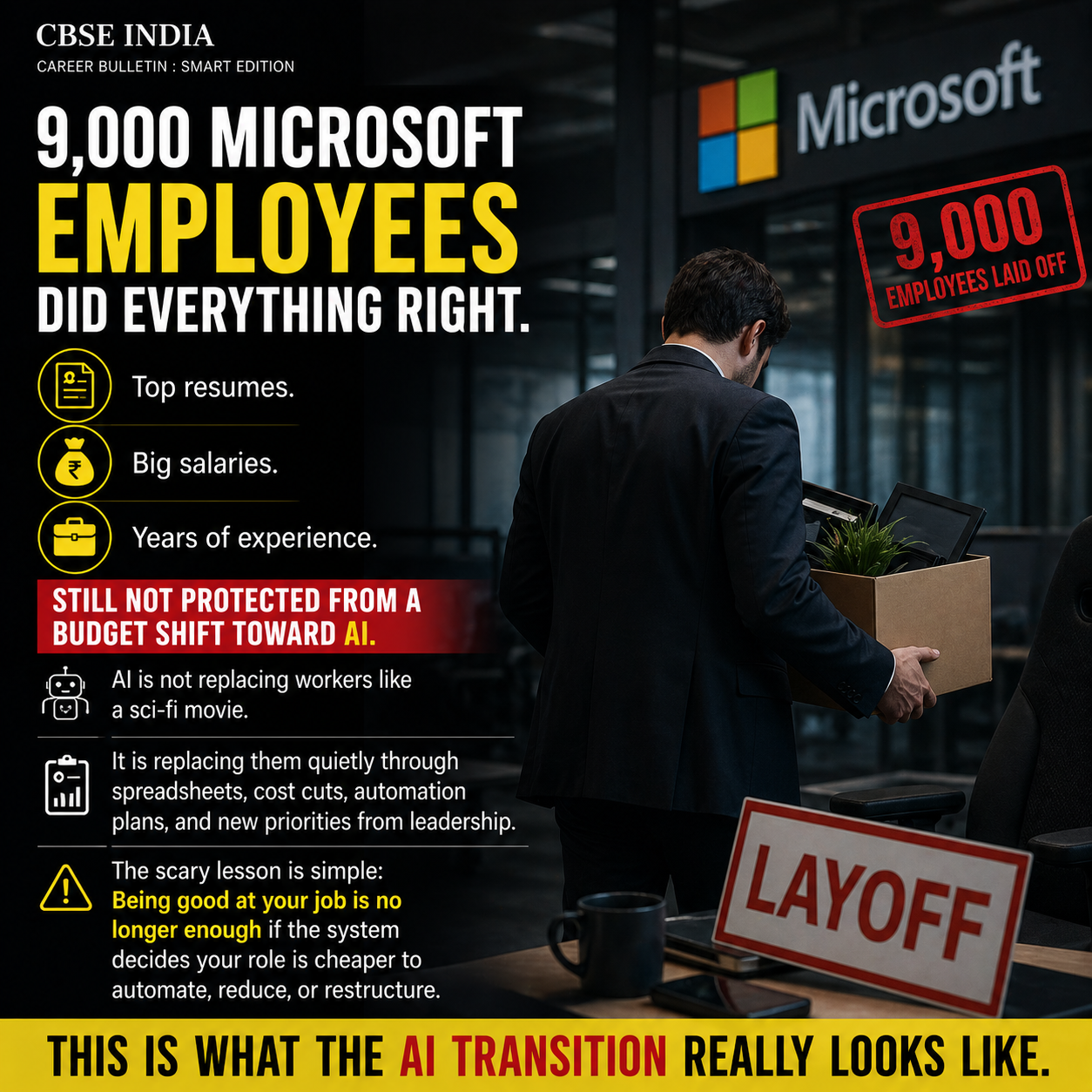
In a significant move, Microsoft has laid off 9,000 employees as part of its strategic shift towards AI and automation. This decision, announced in October 2023, reflects a broader trend in the tech industry where companies are increasingly prioritizing cost efficiency and technological advancements over traditional workforce structures. The layoffs, which affect employees across various departments, underscore the growing influence of AI in reshaping job roles and organizational priorities.
Key Highlights
- Microsoft lays off 9,000 employees amid AI shift
- Tech industry increasingly prioritizes AI and automation
- AI reshaping job roles and organizational priorities
- Cost efficiency drives workforce restructuring
- Employees with top resumes and salaries affected
The Rise of AI in the Workplace
Artificial Intelligence (AI) is rapidly transforming the workplace landscape. Companies like Microsoft are at the forefront of this change, integrating AI to enhance productivity and reduce costs. This shift is not just about replacing manual tasks; it's about redefining entire business processes. According to a report by McKinsey, automation could displace up to 800 million jobs globally by 2030, with significant impacts on sectors such as manufacturing, finance, and healthcare.
The tech industry, in particular, is witnessing a paradigm shift. AI technologies are enabling companies to automate complex tasks that were previously thought to require human intelligence. This transition is evident in Microsoft's recent layoffs, where even employees with impressive resumes and substantial experience found their roles at risk. The move highlights a critical lesson: in the age of AI, being proficient in one's job is no longer a guarantee of job security.
Implications for the Workforce
The implications of AI-driven layoffs extend beyond immediate job losses. They signal a fundamental change in how companies value human capital versus technological investments. As AI systems become more capable, they are increasingly seen as viable alternatives to human labor, particularly in roles that involve repetitive or data-intensive tasks. This shift necessitates a reevaluation of skills and competencies that are valued in the job market.
As AI continues to evolve, it is crucial for professionals to adapt by acquiring new skills that complement technological advancements. Upskilling and reskilling in areas such as data analysis, machine learning, and AI ethics can offer a competitive edge in the job market. For companies, balancing technological integration with human resource development will be key to sustainable growth. For more insights on AI's impact on the workforce, visit Microsoft's official website or consult industry reports.