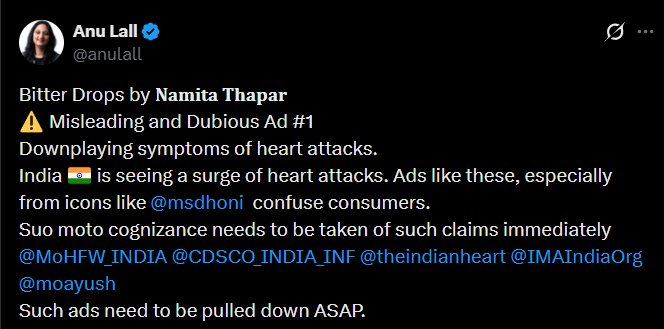
In a recent development, a social media post by Anu Lall has brought to light concerns over a misleading advertisement related to heart health, featuring cricket icon MS Dhoni. The ad, which allegedly downplays the symptoms of heart attacks, has sparked widespread debate in India, a country grappling with an increasing number of cardiac cases. This issue has prompted calls for immediate intervention by the Ministry of Health and Family Welfare, the Central Drugs Standard Control Organization, and the Indian Medical Association.
Key Highlights
- Social media post by Anu Lall raises concerns
- Ad features MS Dhoni, a popular sports figure
- Alleged downplaying of heart attack symptoms
- Call for action from health authorities
- Potential risk to public health
Related link
See Complete Tweet Here :
https://x.com/anulall/status/2047023111565103579
The Role of Celebrity Endorsements
The advertisement in question features MS Dhoni, a beloved sports personality, which raises significant concerns about the influence of celebrity endorsements in shaping public health behaviors. With celebrities having a substantial impact on consumer decisions, the portrayal of medical information by such figures can have far-reaching consequences. Health experts warn that minimizing or misrepresenting heart attack symptoms can delay critical treatment, potentially costing lives.
In India, where cardiac diseases are on the rise, accurate public health messaging is crucial. According to the World Health Organization, cardiovascular diseases account for nearly 17% of all deaths in the country. Misleading advertisements could exacerbate this issue by providing false reassurance to individuals experiencing early symptoms of heart attacks.
Regulatory and Public Response
The social media post has urged key regulatory bodies to take immediate action against the misleading advertisement. The Ministry of Health and Family Welfare, along with the Central Drugs Standard Control Organization, are being called upon to review and potentially withdraw such advertisements. The Indian Medical Association has also been urged to issue guidelines to prevent the dissemination of misleading health information.
As the debate continues, it is crucial for students and parents to remain informed about the potential impacts of misleading health information. Staying updated with credible sources and consulting healthcare professionals for medical advice is recommended. For more information, visit the official websites of the Ministry of Health and Family Welfare and the Indian Medical Association.