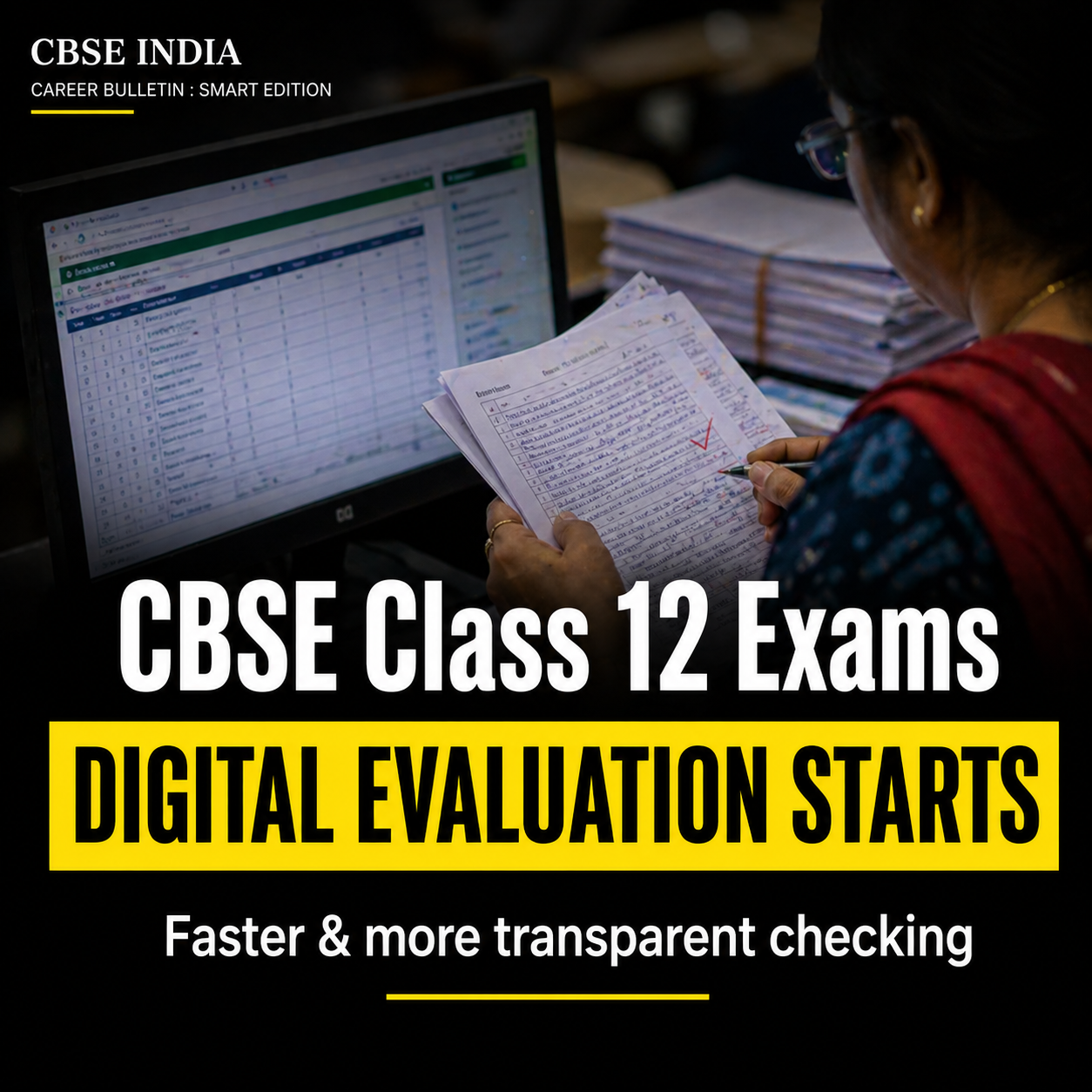
The Central Board of Secondary Education (CBSE) has introduced a fully digital marking system for the Class 12 board examinations. This significant change aims to modernize the evaluation process, improve accuracy, and enhance efficiency. The new system, which involves scanning and on-screen assessment of answer sheets, replaces the traditional manual checking method.
Key Highlights
- CBSE shifts to digital evaluation for Class 12 exams.
- Teachers trained for on-screen marking.
- Expected to improve accuracy and reduce errors.
- Results typically declared in May, may vary this year.
- Alternative assessment for students in conflict regions.
Modernization of Evaluation Process
The shift to a digital evaluation system is part of CBSE's broader initiative to modernize its examination framework. By transitioning to on-screen marking, the board aims to reduce common errors such as incorrect totaling of marks and minimize manual intervention. This system also eliminates the logistical challenges associated with transporting physical answer sheets, thereby saving time and costs.
Teachers across CBSE-affiliated schools have been equipped with login credentials to access the digital platform. They underwent training sessions and participated in mock evaluations earlier this year to ensure familiarity with the new system. A large-scale mock exercise conducted in February further prepared educators for the transition.
The introduction of digital evaluation in CBSE's Class 12 board exams marks a pivotal shift towards a more efficient and transparent system. Students and parents are advised to stay updated with official announcements from CBSE regarding result dates and further instructions. For more information, visit the official CBSE website at cbse.gov.in.